
UWG Center for Water Research & Regional Water Solutions
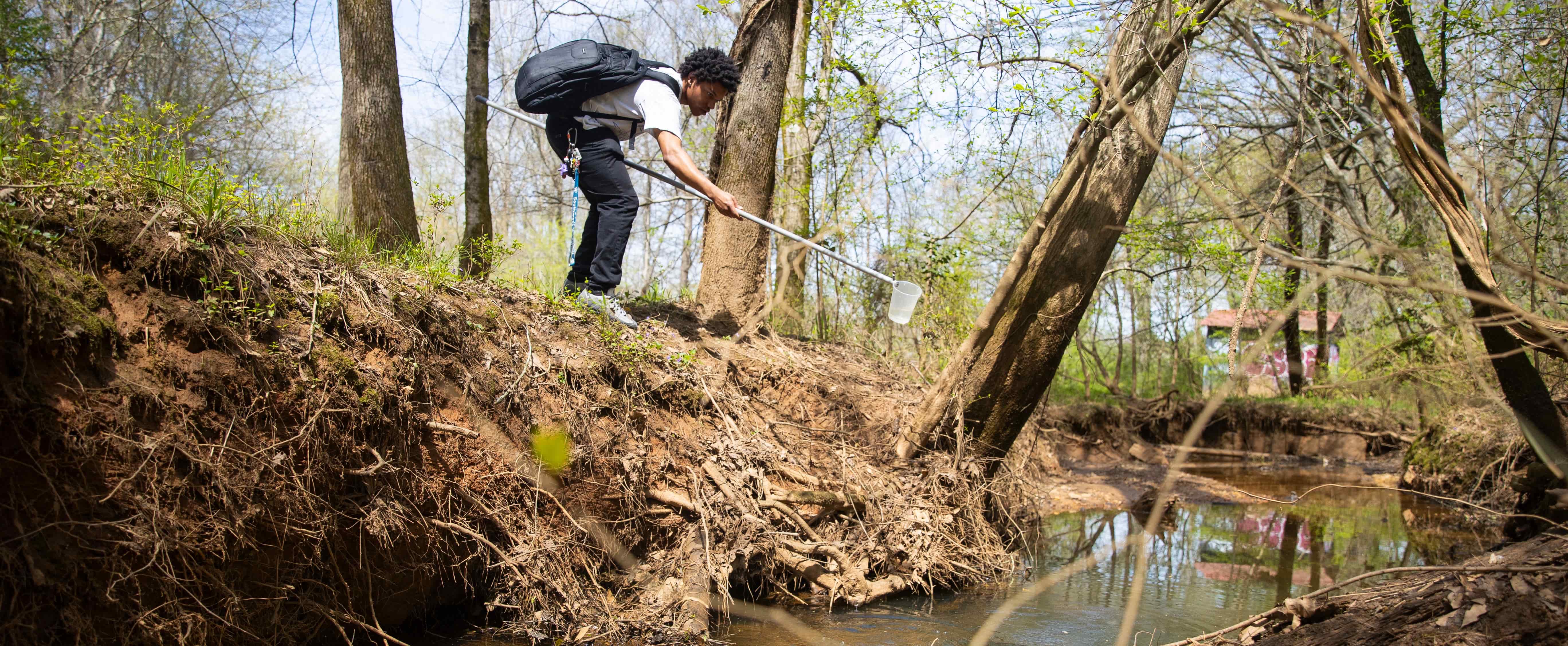
The UWG Center for Water Research and Regional Water Solutions brings together expertise across environmental science, biology, microbiology, chemistry, geospatial analysis, and field research to address the water challenges facing western Georgia. Through research, monitoring, technical assistance, and student engagement, the Center connects university expertise with the needs of communities, utilities, industries, and watershed organizations.
Science in Service of Our Region
Western Georgia faces increasingly complex questions surrounding water quality, watershed health, development, infrastructure, environmental compliance, and long-term water availability. The Center connects UWG research and technical expertise with these real-world challenges.
One Center. Many Disciplines.Water challenges don't fit neatly within one academic discipline. Neither does our research.
Regulatory & Analytical Services
Water-quality testing, compliance sampling, laboratory analysis, quality assurance, monitoring, and reporting.
Aquatic Biology & Microbiology
Microbial water quality, aquatic ecology, bacterial source tracking, fish biology, algae, environmental genomics, and ecotoxicology.
Data, GIS & Decision Support
GIS mapping, water-quality databases, trend analysis, predictive modeling, watershed vulnerability, dashboards, and regional water reporting.
Watershed Science & Hydrology
Watershed assessment, stormwater, stream restoration, sediment transport, field instrumentation, GIS, and remote sensing.
Environmental Chemistry
Nutrients, metals, emerging contaminants, instrumental analysis, analytical methods, and chemical interpretation.