
Bachelor of Arts with a Major in International Languages and Cultures, French
Our aim is to become a top destination for students in the state of Georgia and beyond who are passionate about international languages and cultures, and who seek to engage with questions of diversity, multiculturalism, and globalization as they manifest themselves in a variety of countries, languages, and cultural artifacts. We endeavor to make contact between and among cultures a daily reality for the general community at the University of West Georgia and to thus enhance multicultural and global awareness and sensitivity.
For more information, please see the Academic Catalog. A program map, which provides a guide for students to plan their course of study, is available for download in the Courses tab below.
International Languages and Cultures educates students to become global citizens through instruction in languages, literature, film and culture. Through this study, students gain further knowledge of their own cultural identities and are able to make informed cultural comparisons.
Career Opportunities
Link to Additional Career Information:
https://www.buzzfile.com/Major/Language-Studies
External Resource
Program Location
Carrollton Campus
Method of Delivery
Face to Face
Accreditation
The University of West Georgia is accredited by The Southern Association of Colleges and Schools Commission on Colleges (SACSCOC).
Credit and transfer
Total semester hours required:
Save money.
Take a placement exam to ensure you are enrolling in the appropriate level class. Many students are able to surpass entry level classes based on previous study of the language. The credit by examination process allows you to complete your Core, minor or major requirements quicker and progress toward graduation.
The bottom line - value.
This program may be earned entirely face-to-face. However, depending on the courses chosen, a student may choose to take some partially or fully online courses.
Save money
UWG is often ranked as one of the most affordable accredited universities of its kind, regardless of the method of delivery chosen.
Details
- Total tuition costs and fees may vary, depending on the instructional method of the courses in which the student chooses to enroll.
- The more courses a student takes in a single term, the more they will typically save in fees and total cost.
- Face-to-face or partially online courses are charged at the general tuition rate and all mandatory campus fees, based on the student's residency (non-residents are charged at a higher rate).
- Fully or entirely online course tuition rates and fees my vary depending on the program. Students enrolled in exclusively online courses do not pay non-Resident rates.
- Together this means that GA residents pay about the same if they take all face-to-face or partially online courses as they do if they take only fully online courses exclusively; while non-residents save money by taking fully online courses.
- One word of caution: If a student takes a combination of face-to-face and online courses in a single term, he/she will pay both all mandatory campus fees and the higher eTuition rate.
- For cost information, as well as payment deadlines, see the Student Accounts and Billing Services website
There are a variety of financial assistance options for students, including scholarships and work study programs. Visit the Office of Financial Aid's website for more information.
Downloads
Major Required
25 Credit Hours
FREN 3100, 3211, 4000 OR 4310 OR 4320 (9)
SELECT 4: From FREN 3000/4000 (12)
FORL 3000 (3)
FREN 4484 (1)
Within the framework of intercultural competency, this course will focus on the applicability of language study beyond the undergraduate classroom in future professional career paths. Students will learn how to highlight and market their developing language skills to future employers, and will gain firsthand knowledge about the relevancy and competitive edge their language skills provide as tools of intercultural communication. The course will also examine the historical and contemporary presence of language diversity in Atlanta, Georgia, and the South East, and will situate these regions within an international and transnational network of economic and cultural exchange
Introduction to listening, speaking, reading, and writing in French and to the culture of French-speaking regions.
Continued listening, speaking, reading and writing in French with further study of the culture of French-speaking regions. Pre-requisite: FREN 1001 with a grade of C or better or two years high school study.
A continuation of FREN 1002, FREN 2001 provides a solid base of thematic vocabulary and grammar structures together with a varied sampling of literary readings, communicative activities, and cultural information.
Emphasis on applying reading skills to texts in different disciplines, on the continued development of writing and speaking skills, and on the functional use of grammar.
This course introduces students to theories, methods, and techniques of digital narratives in the French-speaking world. Students will examine narrative conventions, multimodal approaches to contemporary storytelling and cultural and theoretical perspectives that the authors exhibit. Through culturally contextualized case-studies, students will explore and analyze digital narratives in fields such as journalism, art, generative literature, digital storytelling and social media. Students will also apply and develop their language and cultural knowledge through hands-on projects that apply digital narrative techniques and methods.
Extensive practice in written and spoken French. Includes grammar review, vocabulary expansion, and composition and conversation practice on contemporary cultural/literary topics. Can be taken three times for credit with different content.
This course introduces students to theories and practices of intercultural competencies. Offered in conjunction with study abroad programs, this course equips students with the comparative cultural and theoretical frameworks that will empower them to interpret their intercultural and multilingual experiences while abroad. Students will develop their knowledge of language, culture, and foundational concepts and applications of cultural competencies through the culturally contextualized case-studies of their own study abroad experiences.
An introduction to the analysis of French literature through the study of selected text and authors of major French literary movements. The focus of the course may vary from the thematic approach to a study of literary genres.
Introduction to contemporary French and Francophone culture through the study of films, popular music, media, newspapers art, and/or television shows. May be taken up to four times for credit with different content.
Introduction to Francophone cinema through the discussion and analysis of French-language films placed within their cultural and historical context. Can be taken twice for credit with different content.
A study of selected works by major writers of the Middle Ages, sixteenth, seventeenth and eighteenth centuries.
A study of selected works by major French writers of the nineteenth and twentieth centuries.
This course allows students to apply and expand their knowledge of the French language and cultures of the French-speaking world through Business French. We will learn about and apply the language, grammar, and instruments used in the business world, and interpret its customs in a variety of cultural contexts. Students will gain hands-on experience developing tools that refine the oral, written, and intercultural communication skills that prepare them to navigate a range of professional organizations. Moreover, this course positions students to understand how business practices reflect culture and thus equips students with critical thinking, comparative frameworks, and intercultural awareness that position them to participate more responsibly and effectively in an increasingly connected and globalized world.
This course will provide students the opportunity to gain skills translating French to English as well as English to French.
Thanks to a long and illustrious history of film production and an innovative model of state support for the arts, France boasts one of the most vibrant and successful film industries in the world. In this course we will explore the French cinema landscape while participating in two film festivals organized by the French government: the international My French Film Festival and the Tournees French Film Festival at UWG. We will view films from a variety of genres by both well-established and up-and-coming French directors, and we will study issues of representation in contemporary French cinema. We will also investigate the role of cinema in France's cultural diplomacy and overall approach to the arts. To situate our festival experiences and prepare the final course project, we will also study the theory and practice of film festival management and reflect on the place of the public arts within civic and university cultures. The festival will culminate in student-designed projects for French film events at UWG. Course taught in English.
Intensive study of the principles governing the structures of the French language. In this course students will refine and extend their language skills.
A comparative approach to the study of French literature and its cinematic adaptation and/or a thematic approach to selected literary texts and films.
A study of selected works by major French writers of the twentieth century.
A study of the major dramatists of the seventeenth century.
An introduction to the study of poetry and poetics followed by an in-depth analysis of selected poems from one of the major French literary movements (Romanticism, Symbolism, Surrealism, etc.).
An introduction to the cultural diversity of the French speaking world through the study of authentic materials from Europe, Africa, Asia, the Caribbean, and Canada.
A study of the evolution of French couture and civilization from past to present through an exploration of France's major historical, artistic, and social development.
Prerequisite: FREN 1002Through internships, this course provides students with the opportunity to gain supervised work experience in an agency or organization that is relevant to the study of language and culture. Credit hours are based on the following scale: 45 work hours per semester=1 course credit hour; 90 work hours per semester=2 credit hours; 135 work hours per semester=3 credit hours .The course can be repeated for up to 3 credit hours. It cannot be used to replace FORL 4586.
Students will prepare a portfolio in which they will assess their linguistic and cultural knowledge acquired in courses already taken and courses taken during the Capstone semester. At least 51% of this course will be on-line. Portfolios will be prepared electronically and consist of a web page. This format will ensure that the student has the ability to use current technology and be able to utilize a wide range of resources used in the modern workplace, the language classroom, and graduate school. Students will be required to pass an oral proficiency interview.
This course provides students the opportunity to engage with a range of topics relevant to the French-speaking world. The specific topics vary to allow students to deepen their knowledge of social, cultural, and political issues shaping the French-speaking world and beyond.
Major Selects
Field of Study - 18 Credit Hours
FREN 1001-1002
FREN 2001
GRMN/SPAN 1001-1002
GRMN/SPAN 2001
Introduction to listening, speaking, reading, and writing in French and to the culture of French-speaking regions.
Continued listening, speaking, reading and writing in French with further study of the culture of French-speaking regions. Pre-requisite: FREN 1001 with a grade of C or better or two years high school study.
A continuation of FREN 1002, FREN 2001 provides a solid base of thematic vocabulary and grammar structures together with a varied sampling of literary readings, communicative activities, and cultural information.
An introduction to the German language and the culture of the German-speaking world. Beginning of a survey of basic German grammar and the development of the four language skills of listening, speaking, reading, and writing German. Some aspects of everyday life in the German-speaking world will also be introduced. Institutional option: Work with other media (audio, video, and/or computer) outside of class is required.
The second part of an introduction to the German language and culture of the German-speaking world. Completion of the survey of basic German grammar and further development of the four language skills of listening, speaking, reading, and writing German. Aspects of everyday life in the German-speaking world will also be introduced. Institutional Option: Work with other media (audio, video, and/or computer) outside of class is required.
This is the third course in a four-course sequence and is open to students with three years of high school or two semesters of college German or the equivalent.
Introduction to listening, speaking, reading and writing in Spanish and to the culture of Spanish-speaking regions.
Continued listening, speaking, reading and writing in Spanish with further study of the culture of Spanish-speaking regions.
A rapid review of grammar with continued use of listening, speaking, and reading and writing skills, all with a cultural emphasis.Prerequisites: SPAN 1002 or equivalent.
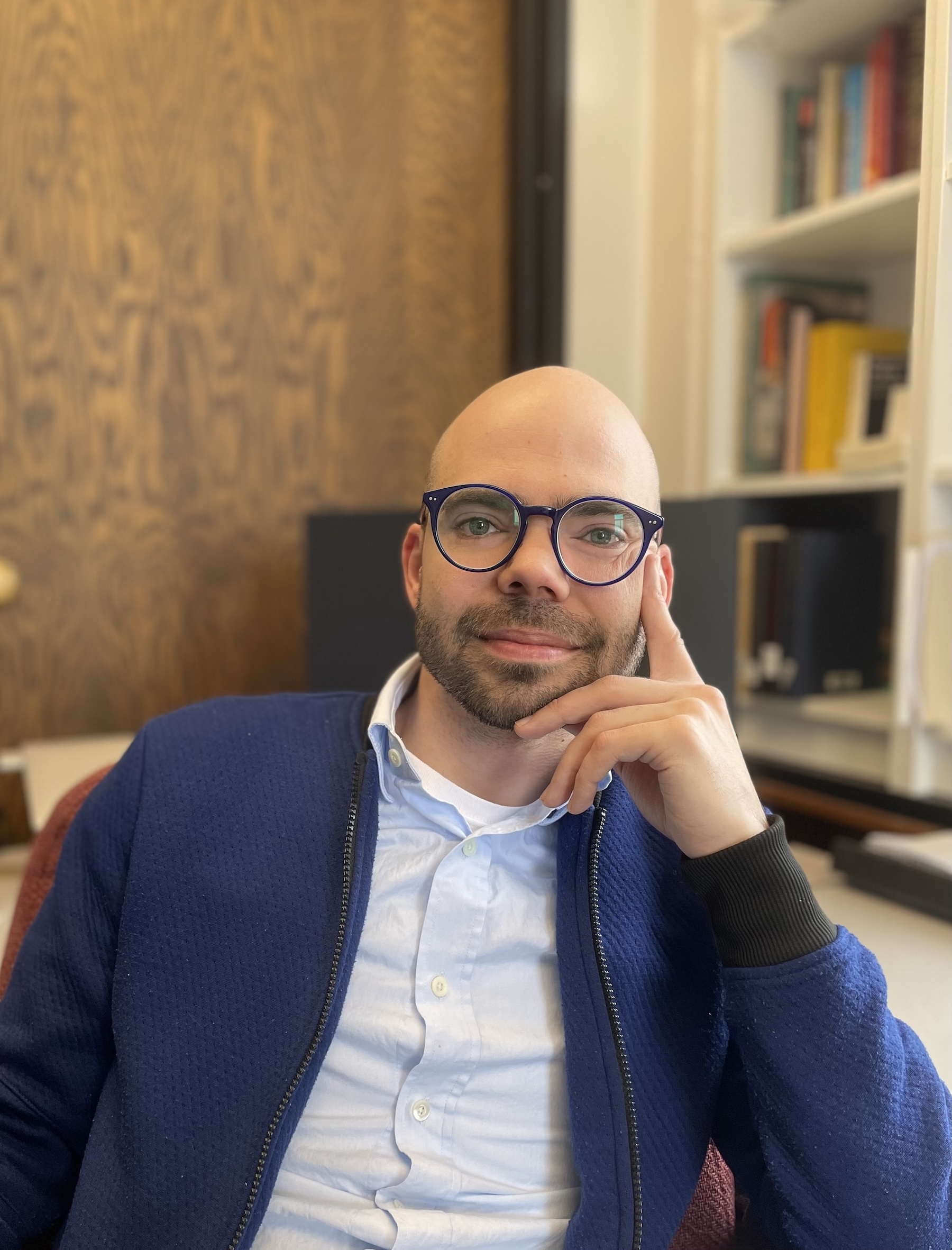
Alex Claussen, Ph.D.
Assistant Professor
Lisa Connell, Ph.D.
Professor of French

Robert Kilpatrick, Ph.D.
Professor of French and Director of the School of HumanitiesApplication Deadlines
For more information, go to UWG Undergraduate Admission Deadlines
Admission Process Checklist
- Review Admission Requirements for the different programs and guides for specific populations (non-traditional, transfer, transient, home school, joint enrollment students, etc).
- Review important deadlines:
- Fall semester: June 1 (undergrads)
- Spring semester: November 15 (undergrads)
- Summer semester: May 15 (undergrads)
See program specific calendars here
- Complete online application
Undergraduate Admissions Guide
Undergraduate Application
Undergraduate International Application - Submit $40 non-refundable application fee
- Submit official documents
Request all official transcripts and test scores be sent directly to UWG from all colleges or universities attended. If a transcript is mailed to you, it cannot be treated as official if it has been opened. Save time by requesting transcripts be sent electronically.
Undergraduate & Graduate Applicants should send all official transcripts to:
Office of Undergraduate Admissions, Murphy Building
University of West Georgia
1601 Maple Street
Carrollton, GA 30118-4160 - Submit a Certificate of Immunization, if required. If you will not ever be traveling to a UWG campus or site, you may apply for an Immunization Exemption. Contact the Immunization Clerk with your request.
- Check the status of your application
Contact
Contact the Office of Undergraduate Admissions for more information.
Specific dates for Admissions (Undergraduate Only), Financial Aid, Fee Payment, Registration, Start/End of Term Dates, Final Exams, etc. are available in THE SCOOP.
Specific Graduate Admissions Deadlines are available via the Graduate School
Objectives not available