Every Voice Matters: UWG Graduate Student on Her Passion of Speech-Language Pathology Share this page
On the Fourth of July years ago, University of West Georgia student Lauren Williams experienced a life-changing moment that would later influence her future: a boy in her neighborhood, who lives with Down syndrome, said her name verbally for the first time.
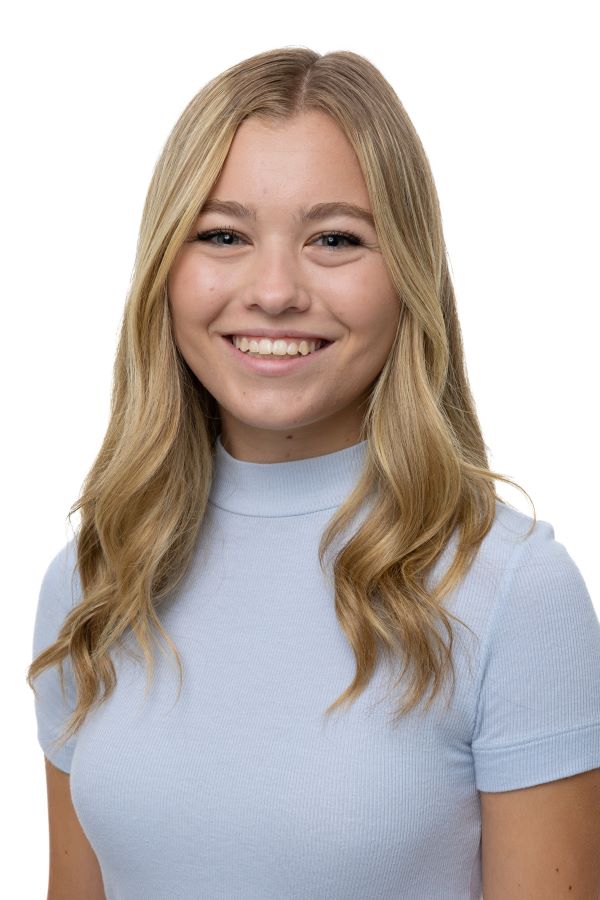
Now, Williams is completing her final semester as a graduate student under the speech-language pathology (SLP) program, and she is already headed back to the clinic where she fell in love with the specialty.
Williams credits her neighbor as the reason she pursued the field. Growing up alongside him, she was able to experience the impact of speech therapy on him and his family.
“I pursued a career in speech-language pathology to give a voice to those who don’t have the ability to communicate,” she said. “From then on, I knew I wanted to impact others’ lives through communication, and becoming an SLP was the way I could do just that.”
At UWG, the bridge between SLP classes and clinicals is built early. During the first year of graduate coursework, Williams noted that students are given the opportunity to apply their classroom knowledge through the College of Education’s Comprehensive Community Clinic (CCC) – an on-campus center that serves a wide range of clients from the local community. The CCC provides clinical experience by pairing students with a specific person in need of speech therapy.
“This allowed for a strong foundation in treatment methods to form early on in my clinical experiences, which continues to support my ability to treat diverse populations with different areas of need,” Williams said.
In the second year, SLP graduate students complete two externships placements: one in a medical-based setting and one in a school system. Williams’ medical placement took her to a pediatric private practice in St. Mary’s, Georgia, where she encountered the technology that changed her neighbor’s life. There, she worked with patients using multiple forms of augmentative and alternative communication (AAC) devices, including systems designed for individuals with fine motor challenges and those that are controlled by eye movement.
“The more I worked with patients who used AAC devices, the more I fell in love with this area of the field,” Williams said.
Her spring 2026 placement brought a different kind of discovery. At Sharon Elementary in Forsyth County Schools, Williams worked with a caseload that included students from eight special instruction classrooms, many of whom are diagnosed with autism. She found that highly engaging therapy activities made a significant difference in student progress – a lesson she plans to carry forward throughout her career.
Speaking of, she won’t have much to worry about. Williams accepted a clinical fellowship position at the same St. Mary’s pediatric private practice where she completed her medical externship.
“I am excited to finally be living out the dream that I have had for the past six years of college,” she said of the full-circle moment. “I am excited to impact the lives of others through communication.”